Writing & Reflections
Writing is the quiet spine of Amel’s practice. It runs beneath the paintings, the gatherings, and the gestures of dissent and resilience. Her texts-poems, essays, and fragments-trace the emotional and intellectual terrain from which her visual and relational work emerges.
They live at the intersection of memory, rupture, tenderness, grief, and becoming. Some appear as complete poems, others as essays, others as unfinished thoughts-fragments waiting for their future form.
Together, they form an evolving, living archive of surrender and return.
Poetry
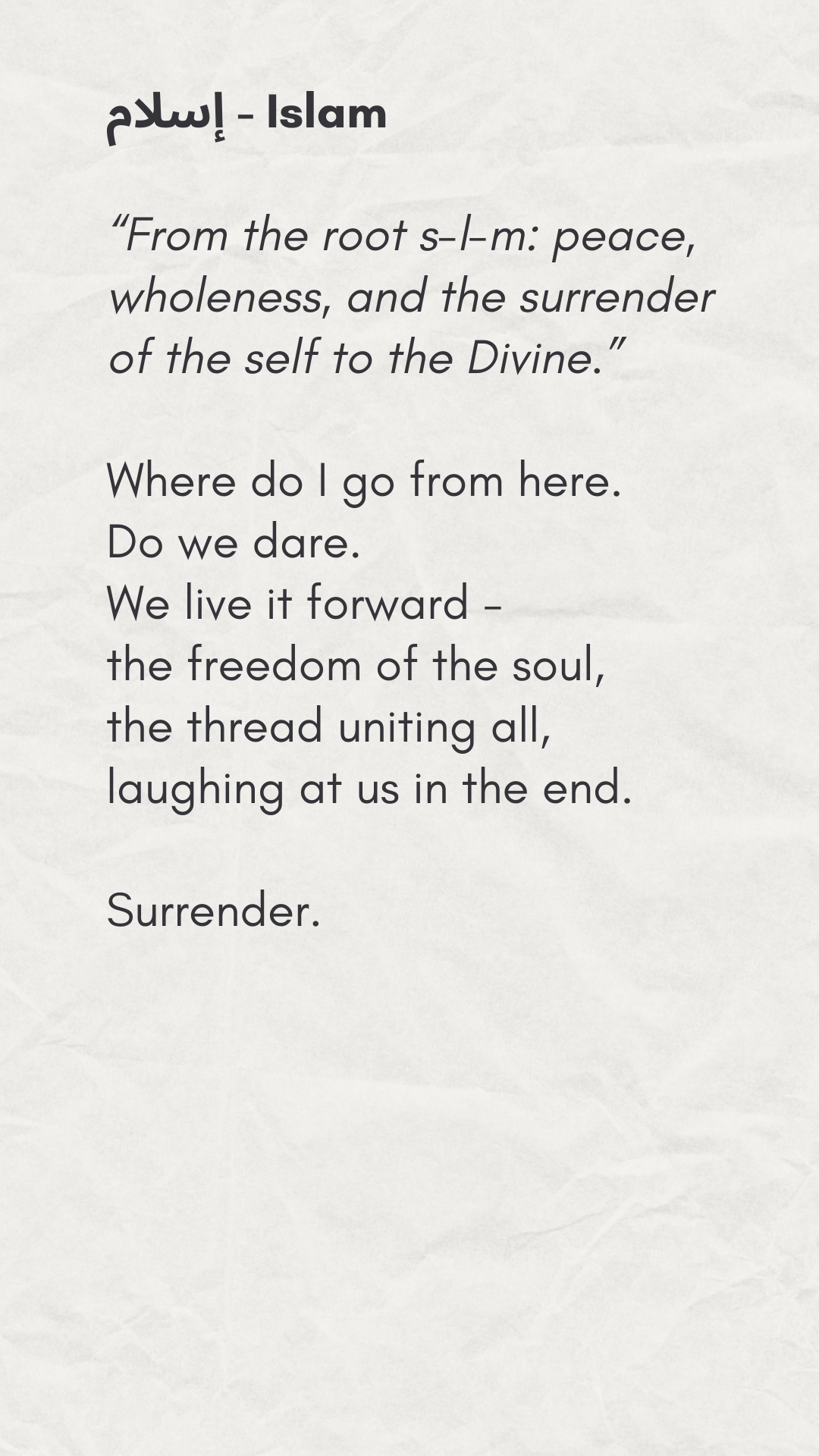
Islam
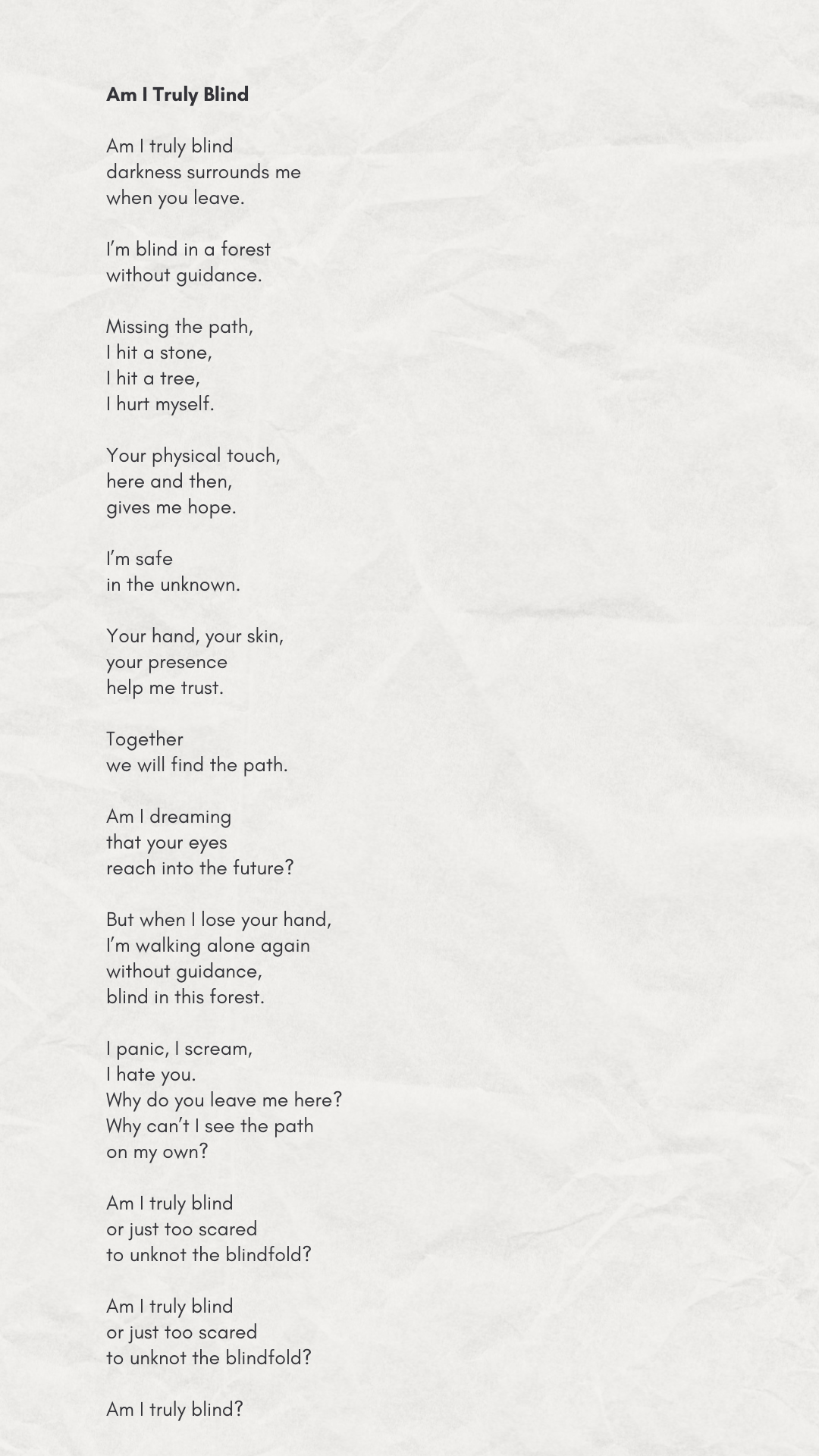
Am I Truly Blind
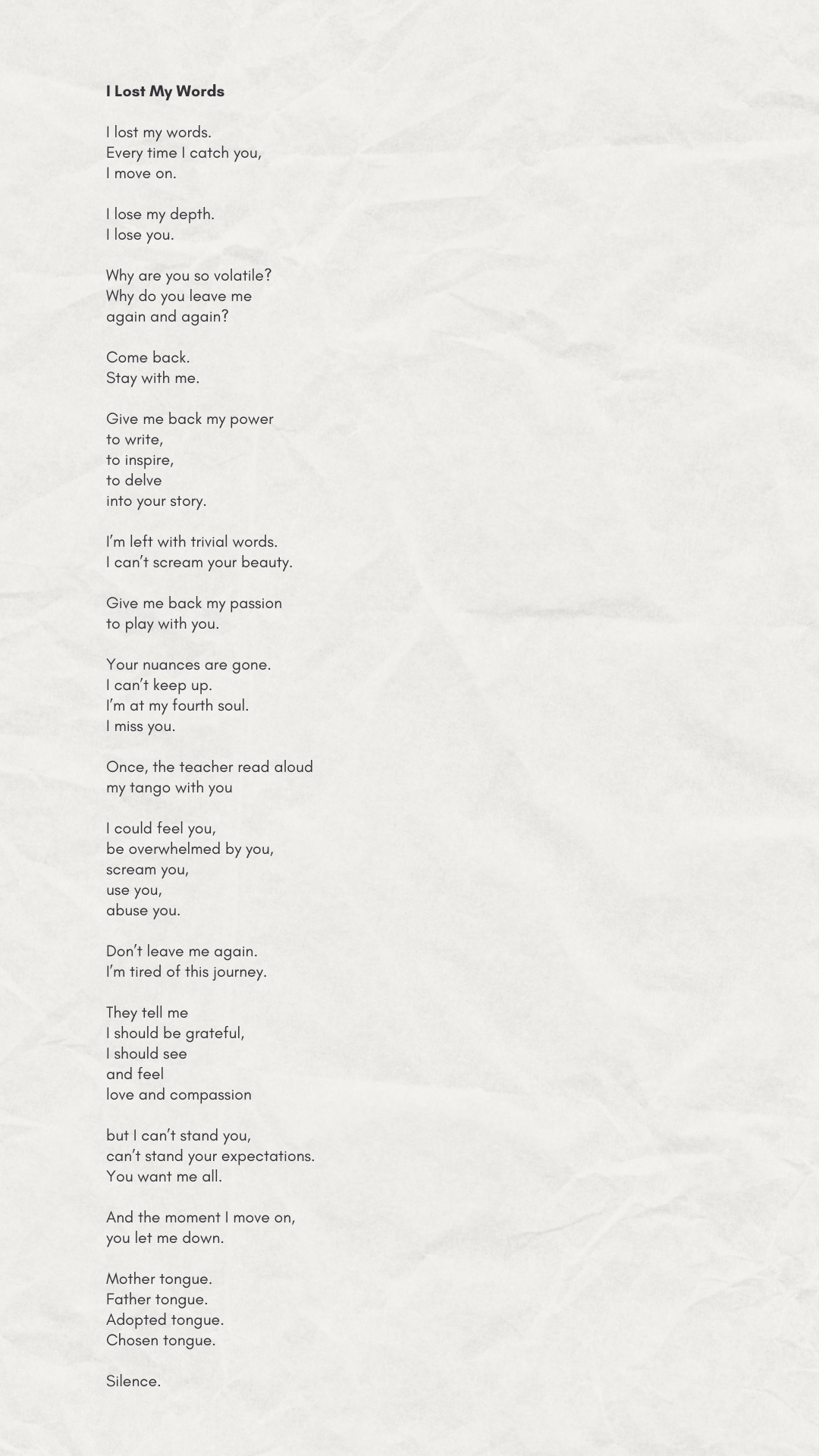
I Lost My Words
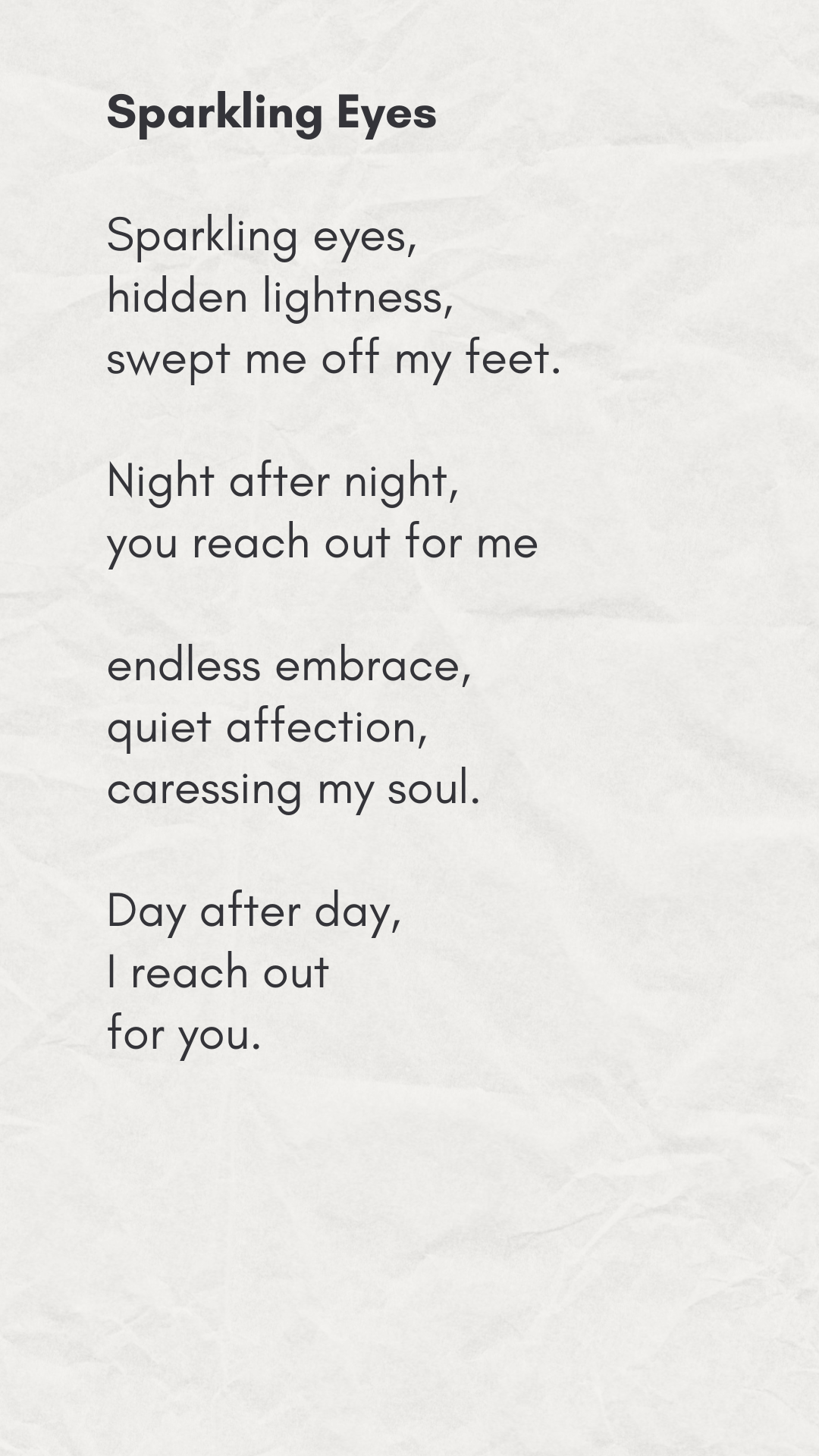
Sparkling Eyes
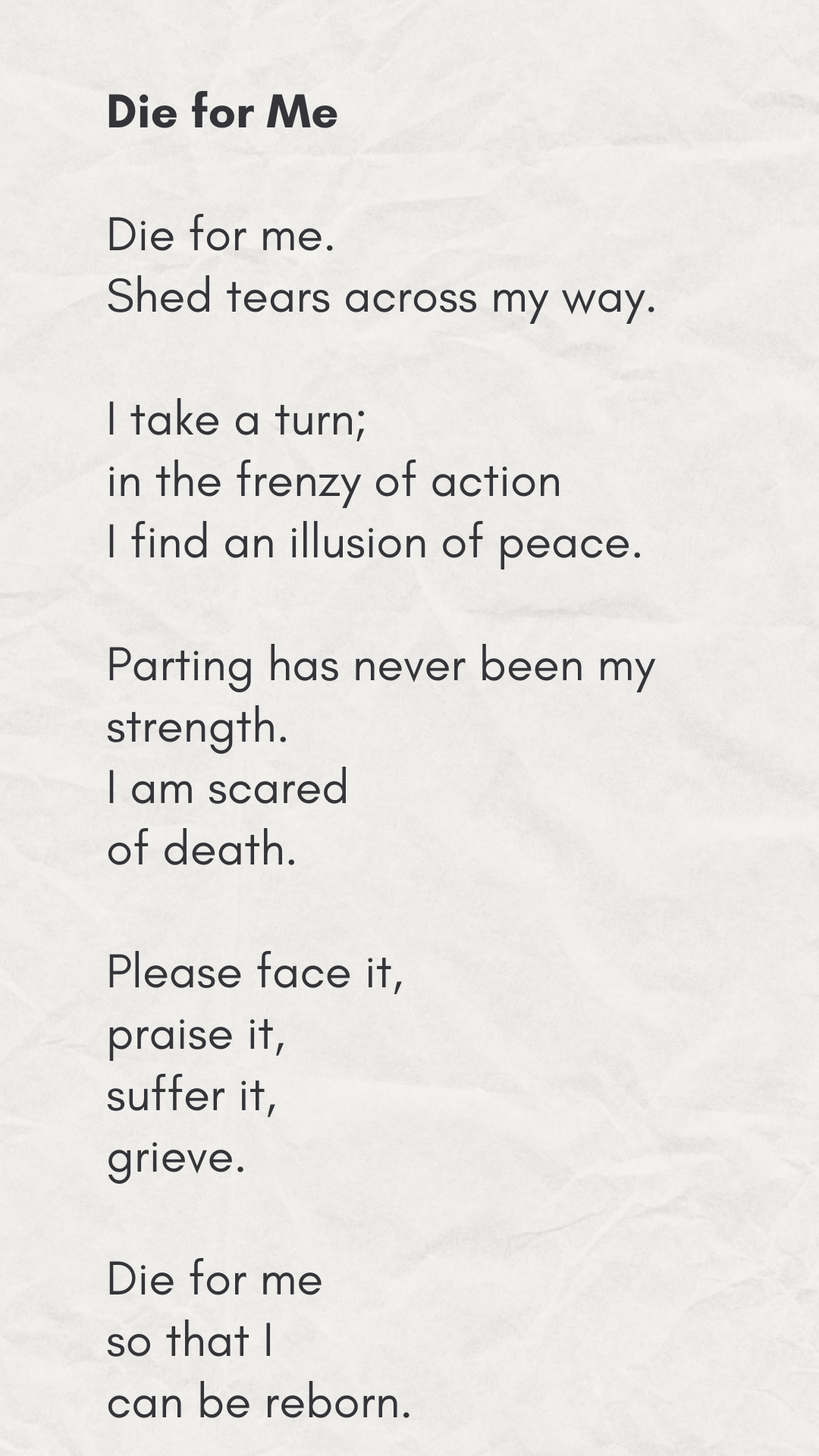
Die for Me
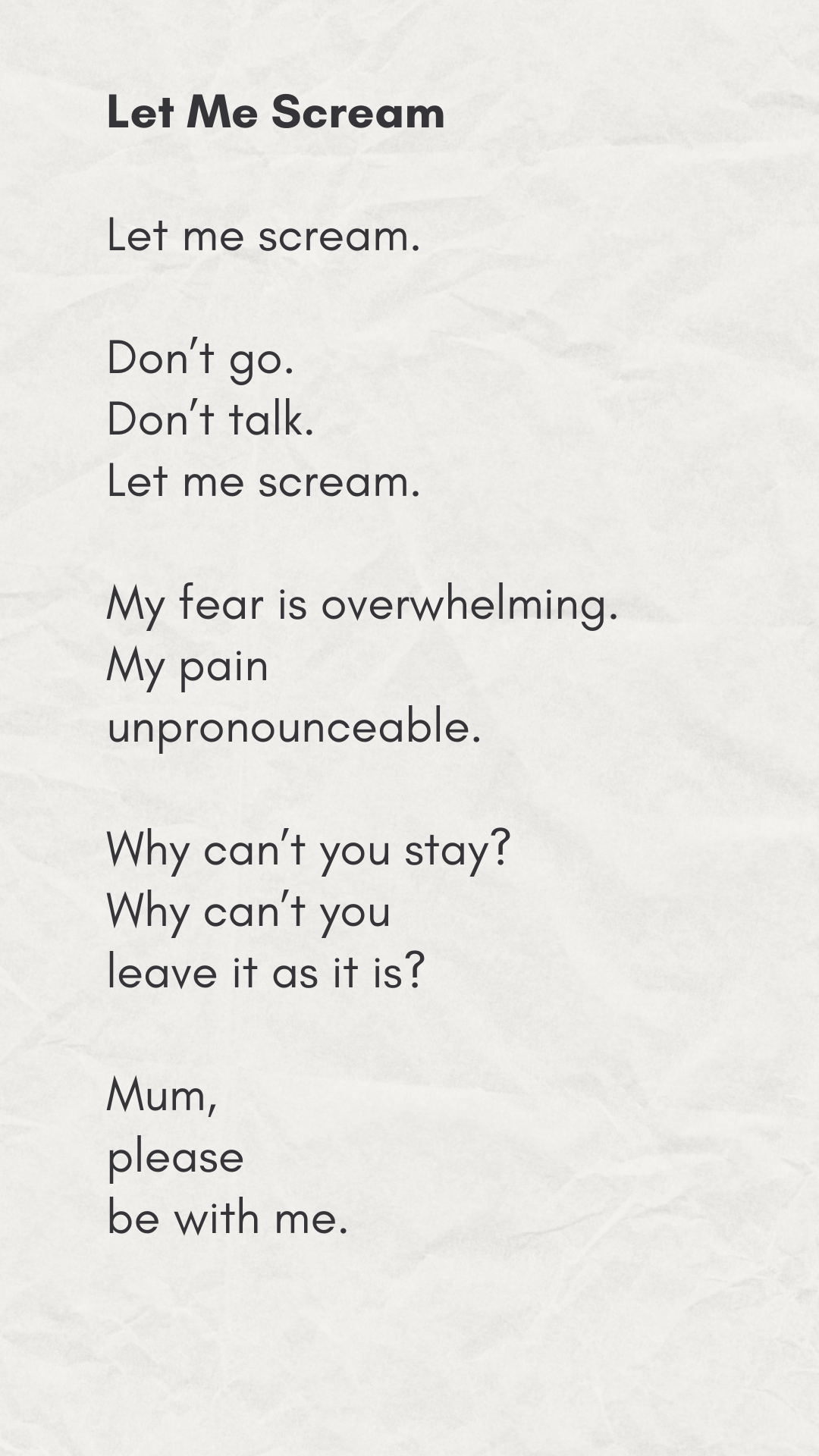
Let Me Scream
Essays
Surrender as a Contemporary Gesture - Artist Statement
In Surrender, I return to the poems I wrote nearly a decade ago-words born during Tunisia’s political transition and held in the margins of sleepless nights, private doubts, and unexpected tenderness. They were once fragments of survival. Today, they form a spatial meditation on the nature of surrender.
To surrender here is not to give up. It is to release the grip of certainty. It is a gesture of trust toward what cannot be controlled. It is a willingness to be shaped by the unseen.
The installation unfolds through six movements-entrance, blindness, sound, silence, light, and rebirth. Each movement becomes a state the viewer must inhabit. In this way, the poems no longer belong to the page alone; they become thresholds.
Language becomes prayer.
Silence becomes material.
Light becomes companion.
The act of surrender becomes not theological, but relational: a contemporary gesture toward the unknown.
The Body as a Site of Dissent
The body remembers what the world attempts to silence. Even when the mind adapts or forgets, the body keeps its own archive of rupture and resilience. This is the source of Body of Dissent: a recognition that dissent is housed not in ideology, but in muscle, breath, and gesture.
A line pushing through plaster.
A figure emerging from a void.
A mark refusing to disappear beneath black paint.
These are not metaphors. They are the physical afterlives of experiences that once had no language.
In this collection, protest is not an event but a becoming. The works ask:
What does the body refuse to forget?
What truths surface when there is no permission to speak them?
Dissent is not something we perform.
It is something we become-cellularly, quietly, inevitably.
➤ Read The Body as a Site of Dissent (PDF)
Resilience, Memory, and the Trace of Conflict
Conflict rearranges not only our landscapes, but the inner architecture of our being. The aftershocks move through memory, through breath, through the subtle ways the body inhabits space. 2425 emerged from witnessing these internal geographies shift.
Grief leaves outlines.
Loss creates negative space.
Memory returns in fragments.
In these paintings, resilience is not triumph. It is the small, stubborn act of continuing to exist. A scar as geography. A shadow as companion. A rising form that insists on being seen.
The works ask:
What remains when everything collapses?
What persists despite erasure?
Whose stories stay buried, and whose survive?
Resilience is not loud.
It is quiet, persistent, and fiercely tender.
➤ Read Resilience, Memory, and the Trace of Conflict (PDF)
The Architecture of Gathering
For more than twenty-five years, I have designed human gatherings across continents-rooms shaped for truth-telling, circles designed for rupture and repair, spaces that ask people to arrive not as roles but as full human beings. Only recently did I understand that this work, too, is an art form.
A gathering is a temporary architecture built from nervous systems.
A choreography of attention.
A sculpture made of breath, posture, silence, and trust.
The materials are intangible:
the tone of a voice,
the warmth of a hand gesture,
the courage of saying “I don’t know.”
When I paint, I move through a similar logic. The composition of a canvas is not so different from the composition of a room. What needs space? What needs containment? What needs to be witnessed?
Both practices-artmaking and gathering-are inquiries into presence.
A gathering succeeds when people feel safe enough to tell the truth.
A painting succeeds when I allow the truth to surface.
In both, I am learning the same lesson:
the work begins only when I stop trying to control the outcome.
To gather is to trust emergence.
To paint is to trust movement.
To lead is to trust the unseen architecture forming beneath the surface.
This is the silent discipline behind my practice: the belief that transformation happens when we create a space large enough, honest enough, still enough for something real to enter.
➤ Read The Architecture of Gathering (PDF)
On Rebirth and the Unfinished Self
Rebirth is not a single moment. It is a series of small permissions we grant ourselves over time: the permission to let go, to outgrow, to speak differently, to inhabit a new form without apology. Much of my recent work-visual, written, relational-has circled around this quiet, unglamorous process of becoming.
We often imagine transformation as rupture. But rebirth, as I have come to know it, is more subtle. It happens in thresholds, in the liminal spaces where identity loosens and something unnamed begins to take shape.
In Bodies of Relation, rebirth appears through portraits that refuse likeness and instead chase energy. In 2425, it emerges from the ashes of conflict-not as optimism, but as insistence. In Surrender, it arrives after blindness, after silence, after the scream.
Rebirth is the acceptance that the self is unfinished.
We die many small deaths across a lifetime:
relationships ending, identities dissolving, illusions breaking, stories collapsing.
And yet, something in us refuses finality.
To be reborn is to allow the self to reorganize after truth has entered.
It is not dramatic.
It is not heroic.
It is often soft, almost imperceptible.
But each time we allow a former version of ourselves to die, we make room for a quieter, more coherent form to appear.
The work of becoming is never complete.
This is not a failure.
It is the essence of being alive.
➤ Read On Rebirth and the Unfinished Self (PDF)
For studio inquiries, commissions and collaborations.