
Curating Human Gatherings
Practice
Amel Karboul’s practice of curating human gatherings sits within a lineage of performance art, social practice, and participatory encounters. She works with presence, space, time, and collective attention as artistic material, creating live, time-based works in which meaning emerges through relation.
These gatherings are not workshops, nor are they facilitation formats in a conventional sense. They function more like temporary installations or choreographed situations: carefully composed environments that hold bodies, silence, speech, and difference, while remaining open to what cannot be planned.
The work moves fluidly between institutional settings and intimate, domestic spaces - from museums, foundations, and public forums to kitchen tables and small circles. The emphasis is not scale or spectacle, but attention.
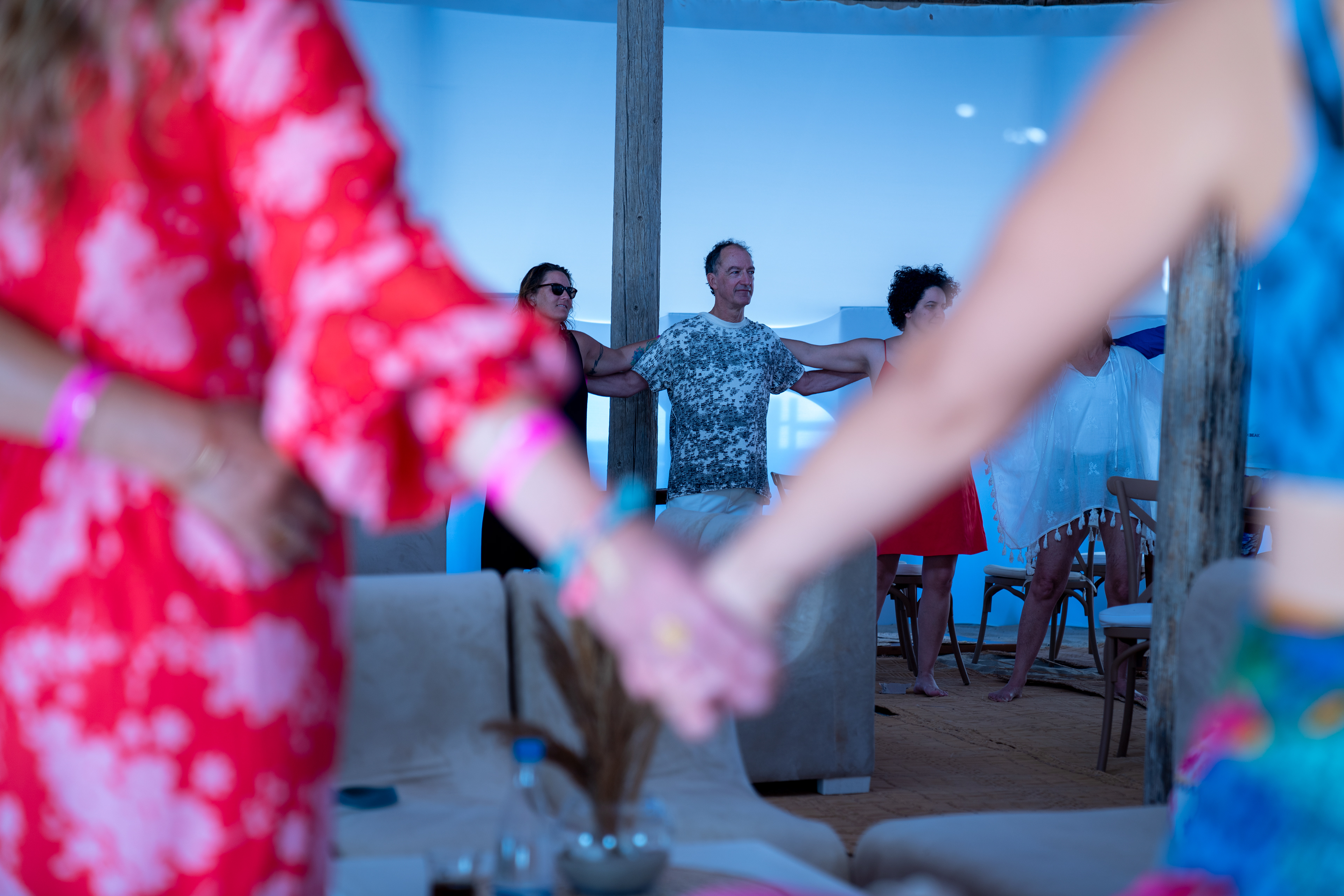
Space as Material
Amel begins not with an agenda, but with composition.
She works through the senses - what is seen, heard, touched, tasted, and felt - treating the room itself as part of the work. Light, seating, proximity, rhythm, pauses, and transitions are all chosen with care. Nothing is neutral.
A gathering held in Tunis, Bellagio, Lagos, or London produces a different emotional and political resonance. Context is never a backdrop; it is an active element. The space shapes the kind of truth that can surface.
Method as Artistic Logic
While each gathering is site-specific, the work often weaves together three strands:
- Story - personal narratives that open relational and emotional thresholds
- Context - research, history, or social patterns that make the invisible legible
- Question - carefully held questions that resist quick answers and linger in the body
- Story - personal narratives that open relational and emotional thresholds
- Context - research, history, or social patterns that make the invisible legible
- Question - carefully held questions that resist quick answers and linger in the body
These elements are not delivered as content, but placed in relation. The aim is not consensus or resolution, but attunement - a heightened capacity to listen, sense, and stay with complexity.
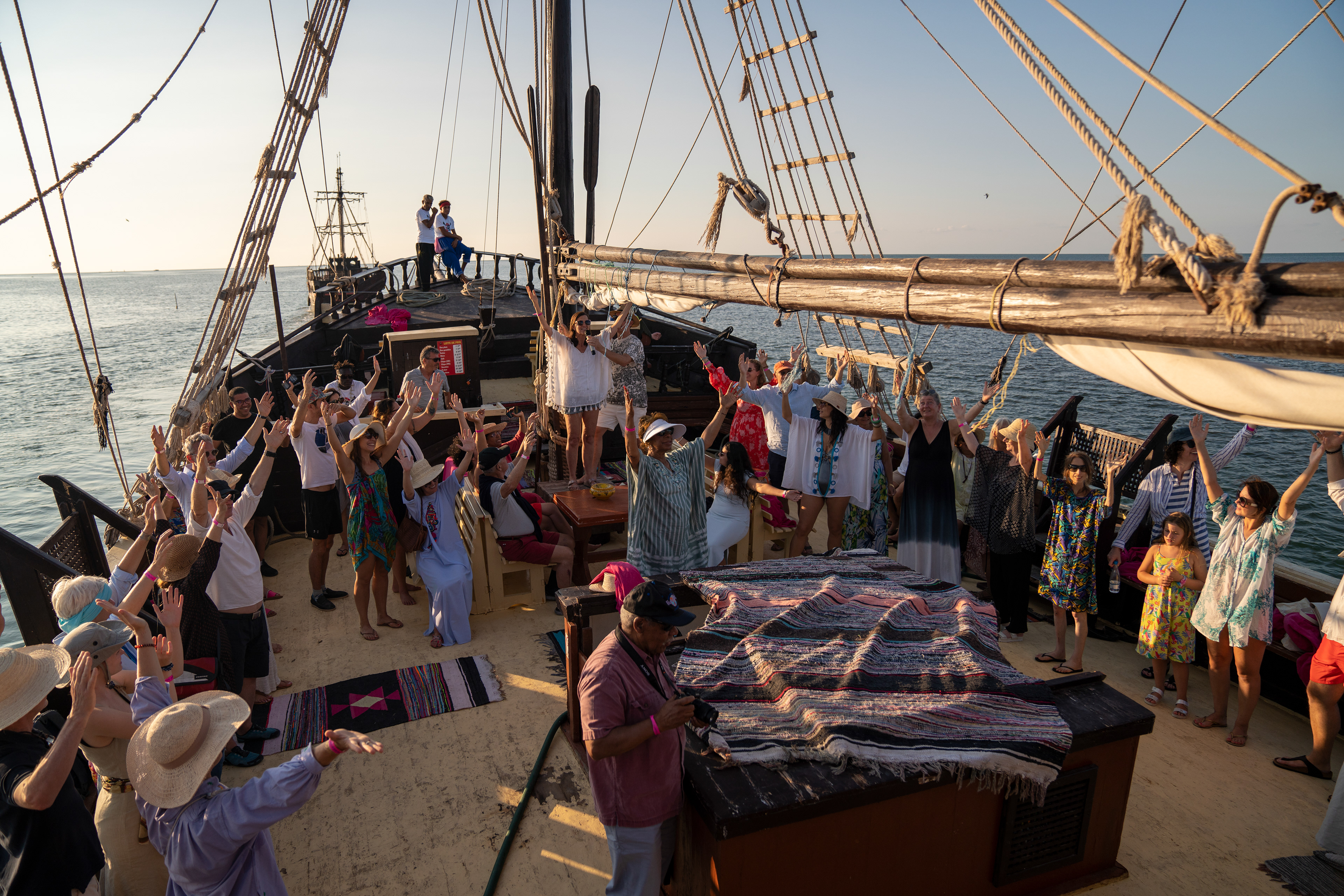
Rhythm and Time
Each gathering unfolds along a deliberate rhythm, closer to choreography than facilitation.
There is an opening that establishes orientation and trust, a deepening through dialogue and embodied attention, moments of intensity or rupture, and a closing that allows what has surfaced to settle. The structure holds, then loosens.
This balance - between discipline and surrender - is where the artistry lives.
Reading the Room
Trained as a dancer, Amel reads a room through breath, posture, pacing, micro-movement, and silence. Resistance is not something to be managed away, but listened to. Silence is treated as material, allowed to expand until something unguarded appears.
What emerges is never uniform. Some gatherings register quietly and unfold over time; others create visible shifts in perception or relation. The work resists spectacle in favour of lasting internal movement.
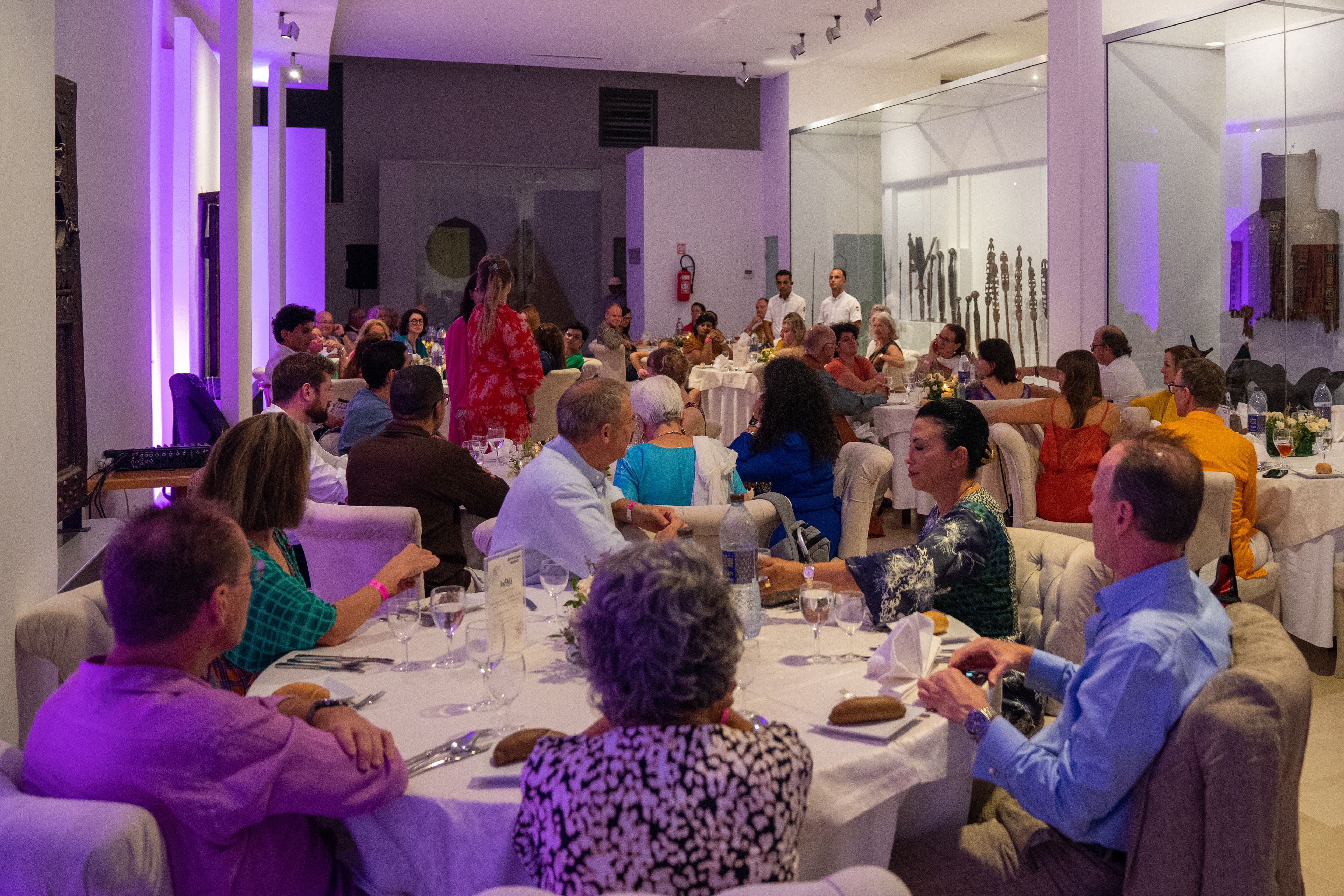
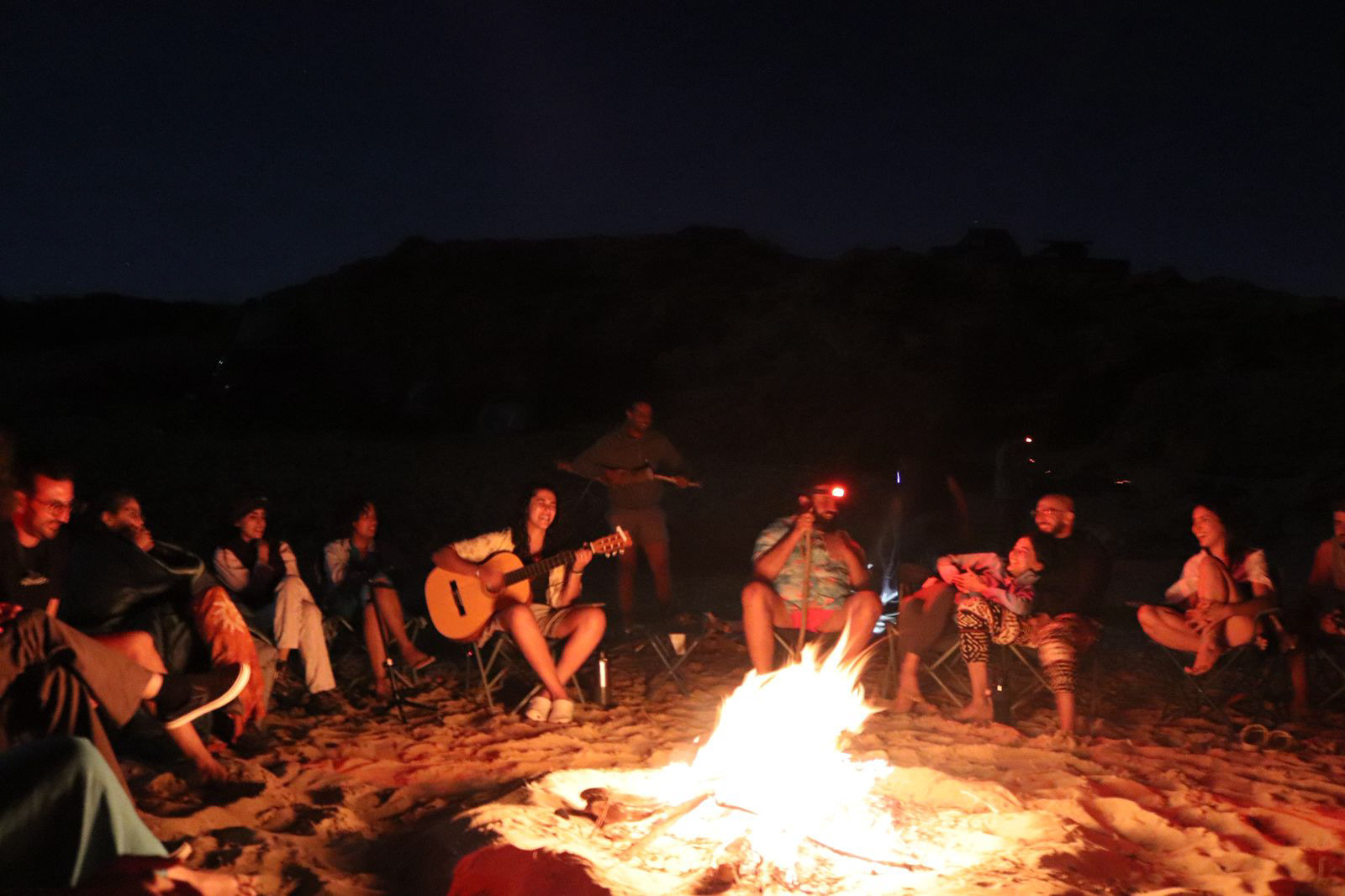
Contexts and Scale
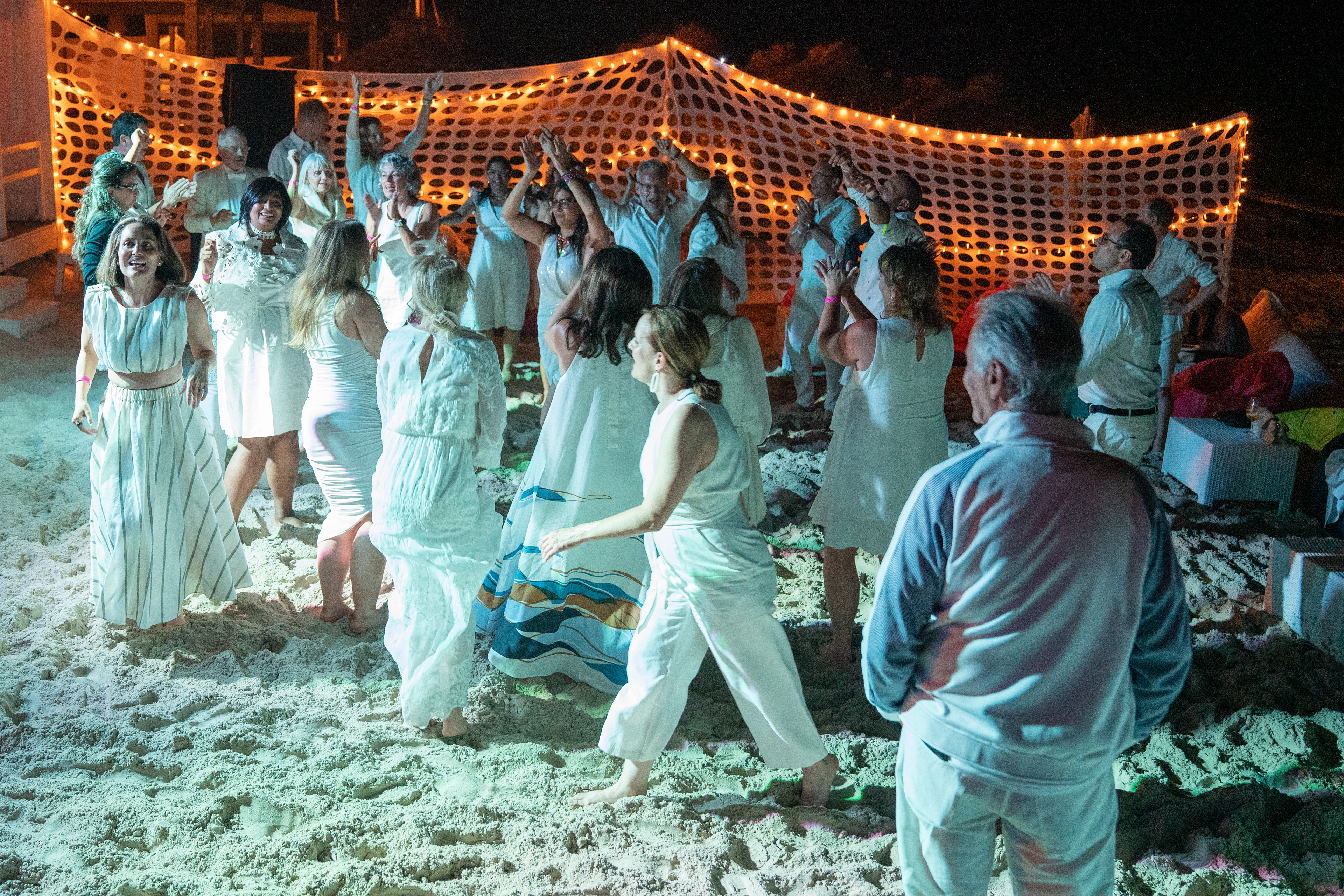
This practice has been developed across political, civic, educational, artistic, and intimate contexts - from moments of public crisis to small, domestic gatherings. Each setting is treated as a site-responsive condition, with the form adapting while the inquiry remains consistent.
At its core, the work asks:
What becomes possible when people are held in a space that is both brave and tender?
What becomes possible when people are held in a space that is both brave and tender?
What Remains
Participants often leave not with answers, but with a changed relationship to themselves, to others, or to the systems they inhabit. What remains is a shift in perception - sometimes subtle, sometimes profound - that continues beyond the room.
Amel curates human gatherings as she creates visual work: through composition, intuition, discipline, and a commitment to staying with what is real, even when it resists articulation.
For studio inquiries, commissions and collaborations.